25 July 2026
Audi CPO Warranty Transfer: What a Second Owner Has to Prove
Car Buying

Audi’s transfer rules turn on a date most listings never mention, and on an application only one person is allowed to file.
A prior Audi Certified pre-owned designation makes a used listing look easier to underwrite than it is. It records how the car was sold once. It does not establish what the next buyer can claim.
Audi’s CPO Limited Warranty does not transfer automatically. Under Audi’s current published terms, a transfer path exists only where the original CPO sale date falls before August 1, 2023, and only through a private-owner-to-private-owner transaction requested by the original CPO purchaser. The application must be submitted within 30 days of the ownership change, carries ownership and mileage evidence, permits a single transfer, and remains subject to Audi’s approval. CPO sales dated on or after August 1, 2023 are described as non-transferable and usable only by the original CPO purchaser. Every other layer needs its own proof: factory coverage, battery, maintenance, roadside, digital services, optional contracts.
What Audi CPO Currently Means
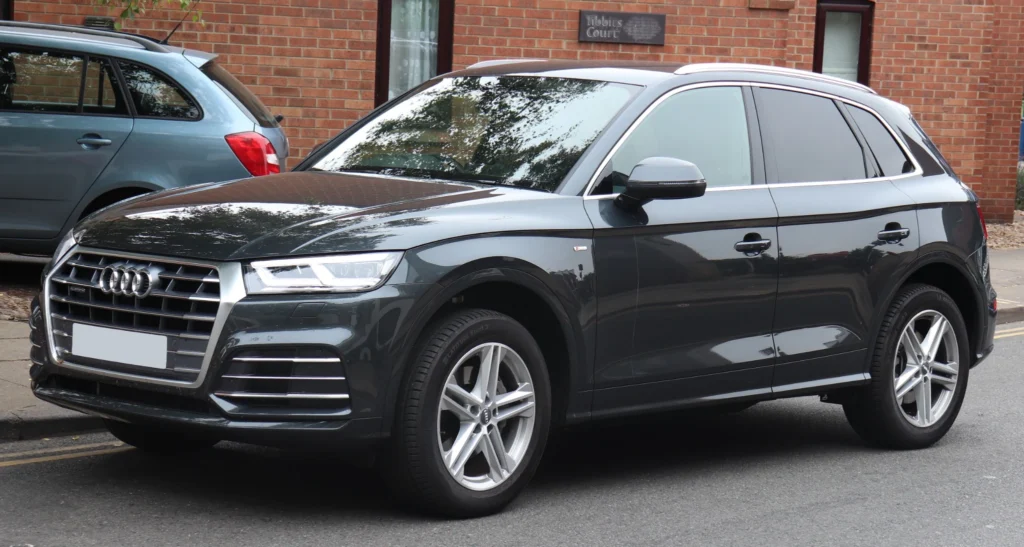
Audi’s CPO Warranty Book opens with what a dealer does before certification: a vehicle history report used to screen out cars that do not meet Audi’s CPO standards, a comprehensive inspection of the interior, exterior, engine compartment and underside, and a road test. Those are completed events, recorded once, at one dealership, for one buyer.
The coverage that follows runs in sequence rather than alongside. Where the Audi New Vehicle Limited Warranty (four years or 50,000 miles, whichever comes first) is still live when the car is sold as CPO, factory coverage continues to its own expiration, and the Certified pre-owned Limited Warranty begins afterwards for one year or 20,000 miles. Where no factory coverage remains at CPO purchase, the CPO year starts at purchase.
The booklet states plainly that this is not an extension of the factory warranty and that the coverage it provides is different. Two contracts, two component lists, two end dates.
The August 1, 2023 Transfer Boundary
Audi’s transfer terms turn on a single date, and it is not one a listing carries. The CPO Limited Warranty can move to a later purchaser only where the original CPO sale date is before August 1, 2023. For sales dated on or after that day, Audi describes the warranty as non-transferable and available only to the original CPO purchaser.
A qualifying date creates a route. It does not prove the route was taken. The current application, updated June 9, 2025, requires the original CPO purchaser to affirm they bought the vehicle as CPO and sold it in a private transaction; limits the transfer to private owner to private owner and excludes dealership participation; requires submission within 30 days of the change of ownership, with documentation of the ownership change and the mileage at sale, such as a bill of sale or state title application; permits a single transfer, after which the coverage cannot move again; and reserves Audi’s right to refuse where guidelines are not met or documentation is missing. A successful transfer produces written confirmation to the new owner. Do not treat the CPO warranty as transferred value before that confirmation exists.
Which date governs is the part buyers get wrong. Model year is not the CPO sale date. Neither is the New Vehicle In-Service Date, which the Warranty Book records in a field separate from the CPO Vehicle Delivery Date. Audi’s public materials use the term “CPO sale date” without defining it against either field, so the governing date has to come from Audi’s record rather than from arithmetic. Download the application from Audi’s current transfer page, and confirm the submission route with Audi Customer Experience before sending title or bill-of-sale documents.
Why a Private Sale and a Dealer Sale Are Not the Same
The published route names its actor. The application is signed by the original CPO purchaser, who affirms a private sale to a named next owner, and it states that dealership participation is excluded. Nothing in it describes a dealer, auction house or consignment agent filing on someone else’s behalf.
That does not settle what happens when a car reaches you another way. A former-CPO Audi arriving through a trade-in, an auction lane, a consignment agreement or an independent dealer’s inventory has not travelled the route the form describes, and Audi’s published materials do not explain what becomes of any remaining CPO balance in those chains. The public record simply stops there.
So the position to take is unproven, not void. A car advertised as former CPO on a non-Audi lot may still carry factory, corrosion or maintenance coverage that has nothing to do with the CPO warranty, and a seller describing the vehicle’s history may be describing it accurately. What is missing is Audi’s VIN-specific written position, and it is worth obtaining before a deposit becomes non-refundable.
What Can Still Follow the Vehicle
Warranty transfer is one entry on a car that carries several protections, and they do not share a rule. Some run from the in-service date; some are contracts attached to a VIN. Where the table says a position is not established, that describes the documents reviewed for this article, not a prediction about a particular car.
| Protection or service | What the current source establishes | Later-buyer position | Proof to obtain |
|---|---|---|---|
| New Vehicle Limited Warranty | Four years or 50,000 miles, whichever comes first. If still running at CPO sale, it continues to its own expiration. | Runs on the vehicle’s clock; no restart at resale is described. | In-service date and Audi’s warranty-status record for the VIN. |
| Audi CPO Limited Warranty | One year or 20,000 miles, beginning after factory coverage expires, or at purchase if none remains. | Conditional. A transfer route exists only for an original CPO sale date before August 1, 2023. | Audi’s recorded CPO sale date, plus written transfer confirmation. |
| High-voltage battery and battery module | Expressly excluded from CPO coverage; may fall under the New Vehicle Limited Warranty where that still applies. | Not established by CPO status. | Model-year warranty literature and Audi’s coverage record for the VIN. |
| Corrosion perforation warranty | The balance of the 12-year coverage, regardless of mileage, is included with a CPO vehicle. | Tied to the vehicle rather than the CPO transaction. | In-service date and Audi’s confirmation of the remaining term. |
| Audi Care, MY2025 and older | Prepaid scheduled maintenance. Coverage stays with the VIN and can be used by subsequent owners. | Can follow the car where a balance remains. In California a refund claim removes the plan. | Plan status and remaining intervals for the VIN. |
| Audi Signature Care, MY2026 and newer | Three years or 30,000 miles at the first three intervals, included with the vehicle, at an authorized U.S. Audi dealer. | Not established for later owners in the materials reviewed here. | VIN-specific plan status from Audi. |
| 24-Hour Roadside Assistance | Included with the CPO program and provided by a third party; membership material follows about four weeks after purchase. | Duration and later-owner treatment are not stated in the CPO booklet. | Audi’s written confirmation of the active period for the VIN. |
Three things sit outside that table. The booklet excludes failures of telecommunications parts, systems or services, including Audi connect, caused by the obsolescence or discontinuation of network technologies, so a connected feature lost to a retired network standard is not a warranty claim. Any optional service contract sold alongside a CPO car is a separate agreement with its own transfer and cancellation terms, and the signed agreement is the only reliable statement of them. Recall and campaign status is a lookup rather than a coverage: NHTSA’s VIN search does not display already-repaired recalls, some newly announced campaigns where VINs are still being identified, or non-safety manufacturer campaigns.
The e-tron Battery Boundary
Audi’s CPO Warranty Book lists e-tron high-voltage system components among the parts the CPO warranty can cover, then carves out the two that carry the cost. The high-voltage battery and the battery module are not covered by the CPO Limited Warranty. The booklet adds that those two components may be covered by the New Vehicle Limited Warranty where that warranty still applies, and directs the owner to an Audi dealer to determine coverage for the specific vehicle. Audi’s own document declines to answer the question in general terms.
Two further exclusions narrow what CPO coverage does for an electric Audi. High-voltage components that wear through normal deterioration, driving habits or driving conditions sit outside the coverage, so the warranty addresses defects rather than capacity loss. Damage caused by improper charging of the high-voltage system, or by improper storage of a high-voltage vehicle, is also excluded, and that is prior-owner behavior a buyer cannot see and certification does not audit.
Keep four things apart when pricing a used e-tron: what the CPO warranty covers within the high-voltage system, the battery itself, the battery modules, and whatever separate battery warranty applies to that model year. CPO status establishes none of them, and it establishes nothing about the pack’s present condition. That evidence comes from the model-year warranty literature, Audi’s record for the VIN, and any independent condition report obtainable before purchase.
What to Have in Writing Before You Treat Coverage as Value

- VIN, current mileage, seller identity, and whether the seller is the original CPO purchaser.
- The New Vehicle In-Service Date, the CPO Vehicle Delivery Date, and Audi’s recorded original CPO sale date, supplied by Audi rather than inferred.
- Audi’s warranty-status record for the VIN, showing which layers are active and the end date of each.
- The applicable CPO Warranty Book, plus the completed transfer application and Audi’s written confirmation wherever a transfer is being claimed.
- Battery-warranty status for an e-tron, and current status for Audi Care or Signature Care, Roadside Assistance, myAudi and Key User access, and any optional service contract, where purchase value depends on them.
- Audi and NHTSA recall checks run on the day of purchase, with service history, inspection records and the vehicle-history report.
The practical sequence is short. Ask Audi, in writing and against the VIN, for the recorded original CPO sale date and for the active coverage layers with their end dates. If factory warranty is still running, ask in the same message whether a transfer application can be processed now and what CPO balance, if any, would become available later; the application treats the CPO warranty as being in effect when the vehicle is within age limits, while the Warranty Book says CPO coverage becomes effective only once factory coverage expires, and the public documents do not reconcile the two. Until those answers arrive, price the car on its condition, history and market, and treat any remaining CPO coverage as an unconfirmed extra rather than as part of what you are buying.
Frequently Asked Questions
Can an independent dealer transfer Audi CPO coverage?
Audi’s published transfer route does not describe it. The application is filed by the original CPO purchaser and covers a private-owner-to-private-owner sale, with dealership participation excluded. That does not mean a car on an independent lot has lost every protection, because remaining factory coverage, corrosion coverage and maintenance plans follow their own rules. It means the CPO warranty specifically is unproven on that path, since Audi’s public materials do not explain how a dealer-mediated chain is handled. Ask Audi for the VIN-specific position in writing before treating CPO coverage as part of the price.
Does Audi CPO cover the e-tron battery?
No. The Audi CPO Warranty Book covers e-tron high-voltage system components but expressly excludes the high-voltage battery and the battery module. The booklet notes those two components may be covered by the New Vehicle Limited Warranty where it still applies, and tells owners to confirm coverage for their specific vehicle with an Audi dealer. The CPO warranty also excludes high-voltage components that wear through normal deterioration or driving conditions, so it addresses defects rather than capacity loss. Battery coverage and battery condition are separate questions, and CPO status settles neither.
Sources Checked
All sources reopened July 25, 2026.
- Warranty Transfer Application — Audi of America, program page.
- Audi Certified pre-owned Limited Warranty Transfer Application — Audi of America, updated June 9, 2025.
- Audi Certified pre-owned Limited Warranty and 24-Hour Roadside Assistance — Audi of America, REV. 6/25.
- Audi Care, Model Year 2025 and older — Audi of America.
- Audi Signature Care brochure — Audi of America.
- Check for Recalls — National Highway Traffic Safety Administration.
Limitations
This article covers the United States and analyzes Audi’s published documents rather than a particular vehicle; it makes no VIN-specific determination. Future Stack Cars has not driven, inspected, serviced, repaired, appraised or tested an Audi for this article, and has no relationship with, or access through, Audi or any dealer. The analysis is bounded by the Audi materials reopened on the date below. Audi’s public materials use the term “CPO sale date” without defining it against the New Vehicle In-Service Date or the CPO Vehicle Delivery Date. The transfer application’s “in effect” wording and the Warranty Book’s later start for CPO coverage are not reconciled in the public documents, and the treatment of dealer-mediated sales is not resolved by the published application. Battery-warranty applicability and current battery condition remain vehicle-specific. Terms and documents change; recheck Audi’s current record for the VIN before purchase.
Last Updated
July 25, 2026.