27 July 2026
Tesla Plans to Open-Source Model S and Model X. What Owners Still Need to Verify
Car Tech
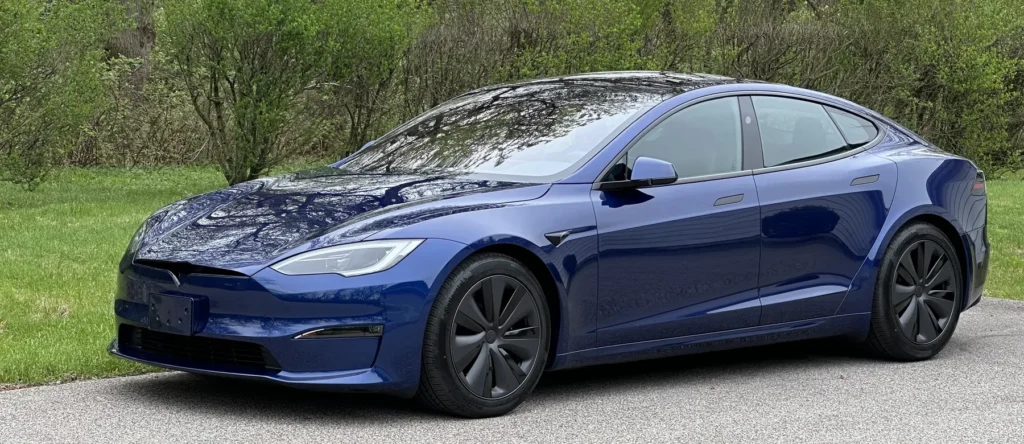
Musk said Tesla intends to do for the Model S and Model X what it did for the original Roadster. The question worth asking is not what Tesla might publish. It is what publishing has already changed — and what it hasn’t.
Nothing an owner or a used buyer should act on has changed yet.
Elon Musk said on 24 July 2026 that Tesla intends to repeat the original Roadster’s open-source release for the Model S and Model X. Electrek, which published the post and audited what the Roadster release contained, quoted him saying Tesla plans “to do the same with Model S & X”. The verb is future tense, and it is doing a lot of work.
Three days later, FSC opened Tesla’s public GitHub organisation, its legal and open-source page, its warranty, pre-owned and Extended Service Agreement pages, and all four public Model S and Model X service manuals. We did not identify a release implementing that statement. We did find something more useful: Tesla has been publishing technical material for these cars for years, and none of it moves the boundaries that decide what an ageing Model S or Model X costs to keep.
What Musk Said, and What the Sentence Fixes
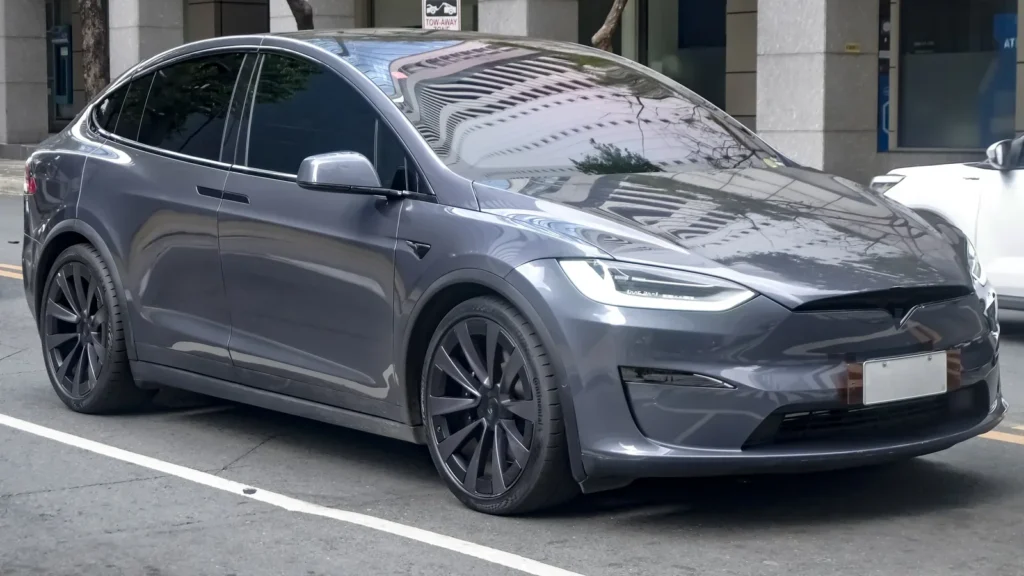
One sentence, pointing at a precedent. That is the whole of it.
The statement fixes an intention. It does not fix a release date, a file list, a licence, a set of covered model years, or which systems are in scope. Every one of those is the part a buyer would need before the announcement could change a decision.
The broadest phrase in the sentence is the one describing what would actually be released, and it covers a wide range of things that behave very differently in practice. Diagnostic material, CAN database files, mechanical drawings, compiled binaries and firmware source all carry different technical value and different legal consequences. A file that helps a technician interpret a network message is not a firmware source tree. A repair procedure is not a parts catalogue. And access to any of it is a separate question from permission to copy, modify or sell work derived from it.
The safest reading is the narrow one. Tesla has committed to a future disclosure. It has not defined what will be in it.
Tesla Has Been Publishing for Years
The framing that nothing was public before 24 July does not survive contact with Tesla’s own pages, and the scale of what is already there is the most useful context a buyer can have.
Tesla currently publishes four separate service manuals covering both cars across their full production history: 2012-2020 Model S, 2021+ Model S, 2015-2020 Model X and 2021+ Model X. None required a login when FSC opened them. All four are live documents rather than archives: the 2021+ manuals carry a 2025 vehicle update section and separate procedures for HW3 and HW4 hardware.
The contents are not marketing material. Firmware reinstall by touchscreen and by Toolbox, diagnostic trouble codes, Service Mode, Service Mode Plus, gateway configuration, gateway unlock, high-voltage disablement, camera calibration, seat calibration, high-voltage controller backup and restore, key programming with no key present. This is the procedural layer a competent independent shop works from, and Tesla’s service site describes itself as a channel for exactly that audience.
There is a software layer too. Tesla’s Additional Resources page lists source drops for systems used across Model S, Model X and Model 3: a pass-through drop for the Parrot Bluetooth module, plus Buildroot, Linux kernel and coreboot sources on GitHub covering infotainment and driver-assist hardware. One detail there is worth noting precisely. That section still lists forthcoming releases with Q3 2018 timelines for a Model 3 radio module and for cellular modem modules. Those entries have not been updated in the years since, which is a reason to treat the Open Source section as a partial index rather than a current release log.
Hold that against the announcement. Tesla has been publishing repair documentation for these cars, at scale, for years. Ask what that has done to the ownership boundaries, and the answer is the article.
The Roadster Precedent, Measured
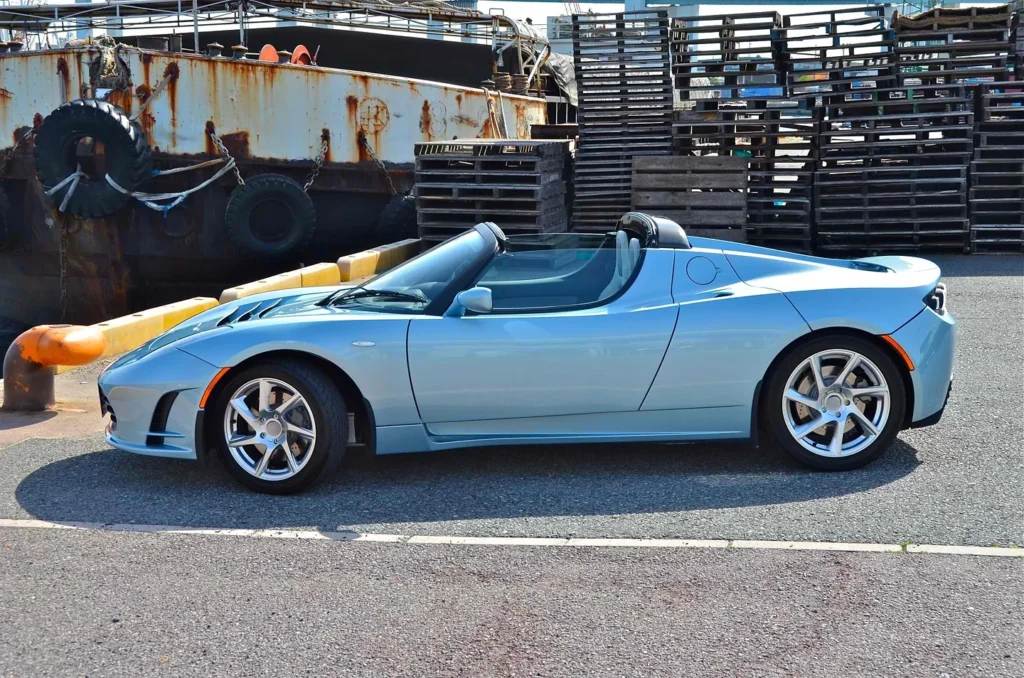
The Roadster repository is worth opening because its shape is visible.
It holds three commits. Two directories — Diagnostic Software and dbc — plus a README and a .gitattributes file. GitHub’s organisation listing shows it last updated in November 2023, and it has not moved since. The repository description bounds it to 2008-2012 Roadster development and diagnostic software files. The README states the materials are released under the terms of Tesla’s Disclosed Research and Development Documents for Roadster, and links to Tesla’s service site.
FSC tried to read those terms directly. The Roadster page on Tesla’s service site resolved, but its body did not render in our retrieval, so we are not characterising what the terms grant or withhold. What can be said from the repository itself is narrower: no conventional top-level licence file appears in the file tree. That is an observation about the tree, not a conclusion about rights. Terms can live in a linked document or inside individual packages, and we have not read them.
Electrek’s audit fills in the inventory: five CAN database files totalling roughly 339 KB, a 309 MB diagnostic software ISO and two PDF quick-guides, with five further document packages behind a Tesla service login. Absent, by that account, are CAD files, mechanical drawings, a bill of materials, firmware source, schematics for the Power Electronics Module, motor design and pack design. Electrek also reports that Antmicro, the engineering firm that rebuilt the Roadster’s electronics in simulation, had to reconstruct component footprints itself because the board packages held manufacturing outputs rather than design sources.
That is a description of one release, from one publication that examined it. It is not a specification Tesla has promised to reproduce for the Model S and Model X, and it does not tell a buyer what a 2016 Model X would get.
Three Legal Layers, Held Apart
Public access and permission to reuse are different questions, and Tesla answers them in different places.
The first layer is the general website notice. Tesla’s Additional Resources page states that neither its internet sites nor the material contained in them grants anyone a licence to Tesla’s intellectual property. That is a blanket statement about the sites, not a ruling on any particular file.
The second is the Patent Pledge, which Tesla describes on the same page as a standstill — a forbearance from initiating lawsuits over electric-vehicle patents against parties acting in good faith. Tesla states explicitly that this is not a licence, not a covenant not to sue, and not authorisation to engage in patented activity.
The third layer is the one that does not exist yet: whatever copyright and software terms would accompany an actual Model S or Model X release. Nothing on the first two layers answers for the third. An independent business planning to build a tool, remanufacture a part or publish derived documentation needs that third layer in writing, and today there is nothing to read.
Where Documentation Stops
Read the manuals closely and they mark their own limit.
The procedures that matter most for out-of-warranty ownership name a Tesla system as a precondition. Firmware reinstall runs through Toolbox. Gateway unlock and Service Mode Plus are documented as procedures, not as open capabilities. Forward-facing camera target calibration, occupant-classification sensor calibration and high-voltage controller backup and restore all sit in the same category. The manual tells a technician what the steps are. It does not confer the account, the tool subscription, the credential or the security authorisation needed to carry them out.
This is the distinction a future release would have to move, and it is the one least discussed. A larger archive of drawings and source would be genuinely useful to engineers, restorers and toolmakers. It would not, on its own, grant a shop the right to unlock a gateway or sign firmware.
So the practical question for an owner is not whether a manual exists for their car. It does. The question is whether the specific repairer they intend to use can complete the specific procedure their car needs, today, on their model year and hardware generation. That is answerable now, by asking, and it does not depend on anything Tesla publishes next.
| Ownership question | What FSC could open on 27 July 2026 | Not established | What it means for you |
|---|---|---|---|
| Service documentation | Four public manuals covering 2012-2020 and 2021+ Model S, 2015-2020 and 2021+ Model X | Whether a future release adds anything to what is already published | Documentation is not the gap; assume it exists and check your model year |
| Diagnostic and service access | Service Mode Plus, Toolbox, gateway and calibration procedures documented | Tool, account, credential and authorisation requirements to execute them | Ask a prospective repairer what it can actually complete on your car |
| Software source | Bluetooth, Buildroot, Linux kernel and coreboot drops listed for S, X and 3 | Vehicle, battery, drive-unit or driver-assist application source | Existing drops are component-level, not vehicle-level |
| Design and engineering files | Roadster precedent only, per third-party audit | Whether CAD, drawings or a bill of materials would be included for S or X | Treat vehicle-level design files as unannounced |
| Reuse rights | General site notice grants no IP licence; Patent Pledge is not a licence | Release-specific copyright and software terms | Do not plan a commercial repair or parts product on rights that do not yet exist |
| Warranty and ESA | Current terms published; ESA runs to 8 years or 100,000 miles | How terms current at an older car’s purchase date differ | Read the warranty document issued with that specific vehicle |
| Parts and service capacity | Not established | Supply, lead times or long-term capacity for either model | Unknown in both directions; price it as neither a risk nor a comfort |
The Coverage Boundary a File Release Does Not Reach
Tesla’s vehicle warranty page sets out the current general terms: a Basic Vehicle Limited Warranty of 4 years or 50,000 miles, and, for Model S and Model X, a Battery and Drive Unit Limited Warranty of 8 years or 150,000 miles with a minimum 70% battery capacity retention across the period. Tesla adds two qualifications that matter more than the numbers. The published version is for general knowledge, and the warranty document supplied with the individual vehicle governs. Vehicles bought before the effective date of the current document remain under the terms in force when they were bought — a 2014 Model S is not covered by a 2026 figure because that figure appears on today’s support page.
Then the part most likely to decide a long ownership. Model S and Model X are eligible for Tesla’s Extended Service Agreement subscription. As of this verification, Tesla lists $125 a month for Model S and $150 for Model X, the two highest in its range, with a deductible on each visit where a covered repair is performed. Coverage begins when the Basic or Pre-Owned warranty expires and runs until the vehicle reaches 8 years or 100,000 miles, whichever comes first. Tesla states that pricing and terms are subject to change.
Two exclusions sit inside that. The standard ESA does not cover the high-voltage battery or the drive unit; Tesla says those are handled by their own limited warranty. The separate Battery ESA that would extend such cover is currently described for Model 3 and Model Y. Branded-title and total-loss vehicles are excluded from ESA eligibility entirely, and under Tesla’s Unsupported Vehicle Policy a vehicle classified as unsupported has its Tesla limited warranties and extended service agreements permanently voided and fast charging disabled — while recall repairs are still performed where the vehicle is safe to repair.
None of that is affected by what Tesla does or does not publish. An owner past the ESA ceiling is looking at out-of-pocket repair either way, and the useful response is a written estimate rather than a repository.
Buying One Used: What to Verify by VIN
A Tesla-direct pre-owned car comes with a 102-point inspection, the Pre-Owned Vehicle Limited Warranty and any balance remaining on the original New Vehicle Limited Warranty, plus an AutoCheck history report. The Pre-Owned warranty adds 1 year or 10,000 miles once the Basic warranty balance is exhausted. Tesla also states plainly that pre-owned vehicles may be sold with open recalls requiring future repair.
That is why the VIN check comes before the listing. NHTSA’s lookup publishes its own limits: it will not surface recalls already repaired, some very recently announced campaigns where VINs have not all been assigned, or safety recalls more than fifteen years old. The earliest Model S cars are 2012, so that horizon is close enough to matter. Run Tesla’s own VIN recall search alongside NHTSA’s rather than instead of it.
Private-party and independent-dealer purchases are not categorically riskier, but the verification load is heavier and specific. The New Vehicle Limited Warranty transfers to a new owner when the ownership transfer is processed through Tesla, and an ESA subscription can be resumed by the buyer after that transfer — both depend on the transfer actually being completed. If warranty coverage has already lapsed, re-entry to the ESA may require a paid inspection, and Tesla states the vehicle must be under 5 years and 62,500 miles for that route. On most out-of-warranty Model S and Model X cars, that door has closed.
Title and supported status deserve their own check. A clean title does not by itself establish that Tesla treats a repaired car as supported, so verify status through Tesla rather than the listing description.
On a Model X, operate each door through a full open-and-close cycle and check alignment, latching, obstruction sensing and any warning messages on the touchscreen. The 2021+ manual documents a falcon-door ultrasonic diagnosis procedure, which tells you the system is complex enough to warrant its own diagnostic path. It does not tell you anything about failure rates, and FSC has not established one.
Before treating this announcement as an ownership benefit: run the VIN through both NHTSA’s recall lookup and Tesla’s own recall search, read the warranty document issued with that specific vehicle, check ESA eligibility for that VIN in the Tesla app, and confirm that a repairer you can actually reach is able to complete the procedures your model year and hardware require. A future release might improve the last of those. As of 27 July 2026, FSC found no documented basis for it changing the first three.
Frequently Asked Questions
Has Tesla already open-sourced Model S and Model X?
No release implementing Musk’s 24 July statement was identified in the public Tesla sources FSC checked as of 27 July 2026, including Tesla’s public GitHub organisation and its Open Source page. Tesla does already publish component-level source drops and four public service manuals covering both cars, but that material predates the statement. Material behind a Tesla service account login was not audited, so this is a bounded finding rather than proof that nothing exists.
Would a future release guarantee parts or easier repairs?
No such link is established. A well-scoped release could improve documentation, diagnostics or lawful tool development, depending on which files are included and what licence attaches to them. It would not by itself provide part supply, shorter lead times, service capacity, security credentials, calibration authority, warranty coverage for an independent repair, or lower repair costs. Parts availability and service capacity for Model S and Model X are unknown to FSC in both directions.
What should a used Model S or Model X buyer verify now?
Check the VIN through both NHTSA’s recall lookup and Tesla’s own recall search, since Tesla states pre-owned vehicles may be sold with open recalls and NHTSA’s tool does not show safety recalls more than fifteen years old. Read the warranty document issued with that specific vehicle rather than the current online summary. Confirm title and supported-vehicle status through Tesla. Then check ESA eligibility for that VIN in the Tesla app: coverage for Model S and Model X ends at 8 years or 100,000 miles and excludes the battery and drive unit.
Sources Checked
- Electrek — Musk says Tesla to ‘open source’ Model S and X, but prior release makes us skeptical
- Tesla — Additional Resources: Open Source, Intellectual Property, Patent Pledge, Unsupported Vehicle Policy
- Tesla — 2012-2020 Model S Service Manual · 2021+ Model S Service Manual
- Tesla — 2015-2020 Model X Service Manual · 2021+ Model X Service Manual
- Tesla — Vehicle Warranty
- Tesla — Extended Service Agreement Subscription
- Tesla — Ordering a Pre-Owned Tesla Vehicle
- GitHub — teslamotors/roadster · teslamotors organisation repositories
- NHTSA — Check for Recalls
Limitations
FSC checked publicly reachable Tesla and GitHub material on 27 July 2026. The finding that no implementing Model S or Model X release was identified is bounded to those sources on that date. It is not proof that no login-gated, non-indexed or later material exists, and Tesla’s service site holds documents behind an account login that FSC did not audit.
Musk’s post is hosted on a platform that blocks automated retrieval, so FSC relied on Electrek’s reproduction of it rather than reading the original. Tesla’s Q2 2026 investor PDF returned the same block; production status is therefore reported here only as third parties describe it, and FSC has not established a final production date for either model. The linked Roadster disclosure-terms page resolved but did not render in our retrieval, so FSC does not characterise the reuse rights attached to any Roadster file. Any future Model S or Model X package must be audited file by file and term by term.
Scope and licence terms for a future release are unknown. This article does not establish parts inventory, repair lead times, collision-repair capacity, insurance effects, service-network capacity or resale effects. Warranty and Extended Service Agreement terms are published, subject to change, and governed for any individual car by the documents issued with that vehicle and its status in the Tesla app. FSC did not drive, inspect, repair, purchase or own the vehicles discussed.
Last Verified: 27 July 2026