25 July 2026
Polestar 4 Is $25,000 Off. What Risk Does the Buyer Still Own?
Car Buying
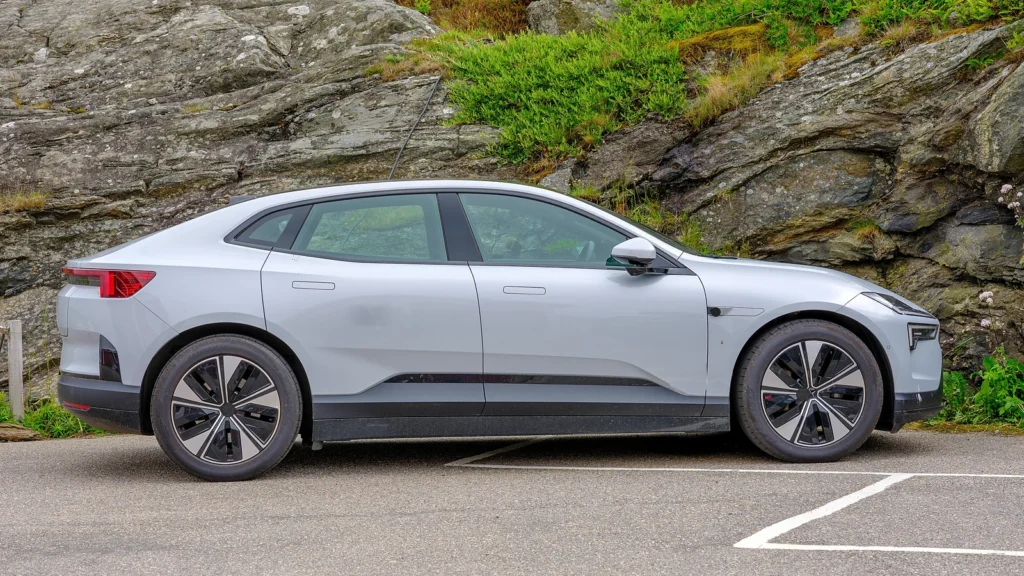
Polestar’s July incentive on the 2026 Polestar 4 is real, documented, and unusually large. Working from one actual Austin VIN and Polestar’s own published terms, here is what the discount changes — and what is still undocumented at the moment you sign.
Polestar is offering $25,000 off MSRP on a cash purchase of a new 2026 Polestar 4, $18,000 combined with 0% APR for up to 60 months, or $19,000 applied to a lease advertised at $499 a month for 39 months. All three expire July 31, 2026, and all three require delivery by that date (S01). Applied to a real car — a Long Range Dual Motor listed in Austin at $64,300 MSRP — the cash incentive produces a program subtotal of $39,300 before tax, title, registration and dealer charges, assuming that specific VIN qualifies for the full offer (S02).
That subtotal is the most reliable number in the transaction. Much of what sits downstream of it is not yet in writing. The Austin listing is $225 above the simple finance arithmetic and does not say why. Polestar’s lease terms add a $995 acquisition fee inside the capitalized-cost calculation and then state that the advertised payment excludes an acquisition fee. Two official Polestar U.S. pages state the battery warranty differently. None of this makes the Polestar 4 a bad car or a bad buy. It means the discount is the part of this deal that has been fully disclosed, and the contract is the part that has not.
This article compares the three transaction structures against one another and against what a buyer still owns after signing. Which structure wins turns on holding period, annual mileage and how far you live from support. Everything below is a public-offer analysis; the binding contract, warranty booklet, VIN recall status, insurance quote and local service path sit outside it, and the buyer calls near the end are conditional for exactly that reason.
What the $25,000 is attached to
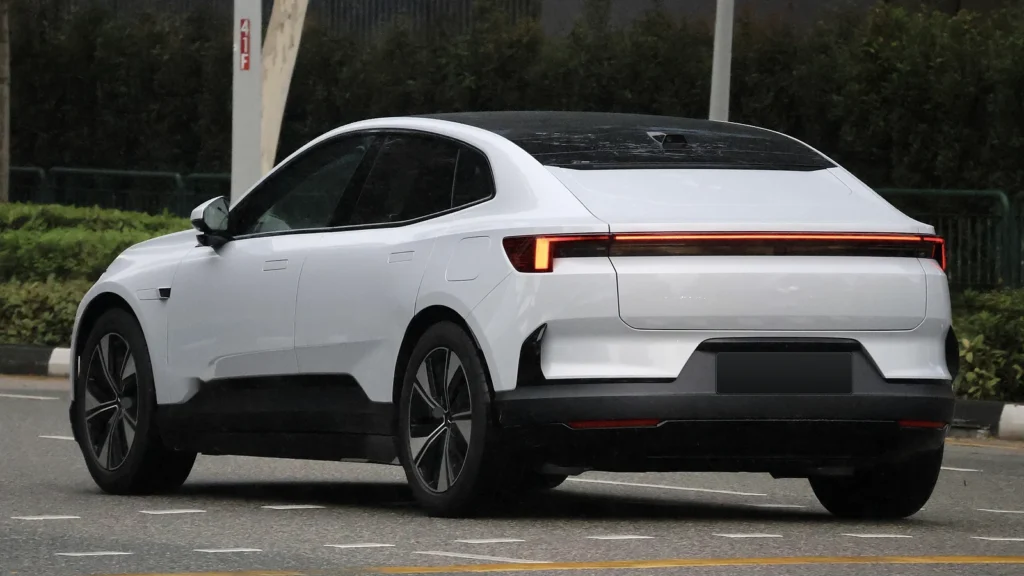
The Polestar 4 is the company’s most confident piece of design: a coupé-profile SUV that deletes the rear window entirely and replaces the interior mirror with a roof-camera-fed display, switchable to show the rear passengers instead (S15).
The performance proposition is specific, although the figures remain manufacturer claims. Polestar’s published U.S. specifications put the Dual motor at 544 hp and 506 lb-ft, 0–60 mph in 3.7 seconds, EPA range up to 280 miles, and 200 kW DC charging on a 100 kWh battery (S15). The Rear motor is slower and, at up to 310 miles, goes further.
FSC has not driven, inspected, charged or measured this car. Every figure above is Polestar’s own published claim, and Polestar notes results vary with conditions and load. The object of desire is legitimate. The question is what a buyer inherits along with it.
One real VIN, three different transactions
National incentive pages are written against a hypothetical vehicle. To test whether the arithmetic survives contact with an actual car, this article follows a single listed VIN rather than a configurator build.
The car is YSRPA3A40TK000635, stock P1002, a 2026 Polestar 4 Long Range Dual Motor with the Pilot pack, listed by Polestar Austin at $64,300 MSRP and a $46,525 sale price (S02). The check-digit result shows that the listed VIN string is internally consistent under the federal formula in 49 CFR §565.15 (S06). It does not prove current availability, equipment, incentive eligibility, recall status or physical-vehicle identity.
The reason to use this VIN is arithmetic. Polestar’s specification page lists the Dual motor from $62,900, and the national lease example is built on an MSRP of $64,300 including a $1,400 destination and delivery fee (S01, S15). Those figures reconcile, and the Austin car’s MSRP matches the advertised example to the dollar, so the national lease example and the Austin listing share the same published trim, powertrain and $64,300 MSRP baseline. The Monroney label is still required to confirm the exact VIN equipment.
Two other listings act as controls. In New Jersey, Polestar Short Hills lists an optioned Dual Motor Pilot & Plus at $74,400 MSRP and a displayed price of $75,299, and its inventory disclosure states that displayed prices include an $899 documentary-preparation fee — $74,400 plus $899 lands exactly on $75,299 (S03, S04). In California, Polestar Marin lists a Long Range Single Motor at $64,600 MSRP (S05). The New Jersey page shows what full fee disclosure looks like. Austin’s does not, which is where the arithmetic starts to come apart.
One point to settle before the money: the Austin listing’s specification block gives the range as 255 miles while the same page’s description and Polestar’s official page both say up to 280 miles EPA for the Dual motor (S02, S15). The dealer page does not resolve it; obtain the Monroney label or written VIN-specific EPA information before relying on either figure.
Cash: $39,300 is a program subtotal, not a price
Polestar’s cash offer is stated plainly: $25,000 off MSRP for a customer purchasing a new 2026 Polestar 4 with cash, subject to retailer participation and delivery by July 31, 2026 (S01).
Against the Austin car’s $64,300 MSRP, that produces $39,300 — excluding everything a Texas buyer pays on top: sales tax, title, registration, government fees and any dealer documentary or preparation charge, all of which the Austin page’s own disclaimer confirms are excluded (S02). So $39,300 is a program subtotal. It is not an out-the-door price, and not a commitment by Polestar Austin.
Two conditions attach. The offer is written against MSRP generally, not against this VIN, and nothing published confirms this car clears every eligibility test. And a fourth incentive on the national page is easy to miss: a $1,000 Loyalty Bonus for current and former Polestar owners and eligible household members at the same address, one per eligible VIN, not usable toward sales tax (S01). For a household that already owns a Polestar the cash subtotal becomes $38,300 — but the retailer has to confirm eligibility and apply it, so it is a question to ask, not a number to assume.
A lower entry price does reduce absolute exposure to depreciation. It does not shorten the distance to a service point, speed up a collision-parts order, or produce an insurance premium. Those stay with the buyer for as long as the car does.
Zero percent: a $7,000 trade with a $225 loose end
The financing offer pairs $18,000 off MSRP with 0% APR for up to 60 months for qualified customers, which Polestar expresses as $16.67 per month per $1,000 financed (S01). On the Austin car’s MSRP that is a program subtotal of $46,300 and, at zero interest over 60 months, $771.67 a month before tax, title, registration and license.
The trade is explicit: taking 0% costs $7,000 of incentive relative to cash. Whether that is a good trade has a clean answer. If a buyer keeps the $39,300 they would otherwise have handed over and draws it down to make sixty payments of $771.67, the retained money has to earn roughly 0.554% a month — about 6.65% nominal, or 6.85% effective annually before tax — simply to break even. That is a demanding hurdle for money that has to stay liquid enough to cover a fixed payment every month for five years, and it ignores taxes, volatility and the value of holding cash for its own sake. It is not a recommendation in either direction; it is the number that makes “0% is free money” answerable against a buyer’s own balance sheet.
Then there is the $225. The Austin page shows $46,525, not $46,300 — $3.75 a month across sixty payments, which is trivial, and an unexplained line item, which is not. The page’s own disclaimer excludes document preparation charges, so it cannot be a doc fee on the page’s own terms, and it is not identified as tax, an accessory or a finance charge either. FSC will not name it, because no published source does. The amount is small in relation to the transaction, but material as a disclosure test: require the line-item buyer’s order that explains it, and do not accept an unexplained line between the advertised program and the buyer’s order.
The $499 lease: a $995 question and a 7,500-mile ceiling
The advertised lease is $499 a month for 39 months on a 2026 Polestar 4 Long Range Dual Motor, with $1,000 down, the first month’s payment due at signing, $0 security deposit and a $19,000 non-cash incentive applied (S01).
Thirty-nine payments of $499 total $19,461. Add the $1,000 down payment and the scheduled cost of the contract is $20,461, or $524.64 a month — before tax, title, registration, license, insurance, maintenance and dealer fees, all of which Polestar states are additional. Cash due at signing before those other charges is $1,499.
The acquisition fee is unresolved in Polestar’s own terms
Polestar’s footnote builds the payment from an adjusted capitalized cost of $45,295: $64,300 MSRP, plus a $995 acquisition fee, less the $1,000 capitalized cost reduction, less the $19,000 incentive. The same footnote then states that the advertised lease payment does not include “taxes, title, registration, license, acquisition fee, insurance” and other dealer fees (S01). The identical wording appears on Polestar’s ownership-commitment page (S13), so this is not a typo on one landing page.
The formula already adds the $995 to the capitalized cost that produces the $499, yet the same terms say the advertised payment excludes an acquisition fee. The page therefore does not establish whether the $499 fully reflects the fee or whether a dealer will collect a separate amount at signing. The published scheduled-cost calculation remains $20,461, or $524.64 a month before taxes and other charges. If a worksheet adds another $995 outside that calculation, require a written reconciliation rather than assume the extra charge is valid. This is not evidence that anyone charges the fee twice; it is a reason not to sign a worksheet that does not show the acquisition fee on its own line.
Mileage is where this lease actually prices itself
The advertised term allows 7,500 miles a year, with excess mileage at $0.25 a mile (S01). Over 39 months that is 24,375 miles total — a low ceiling for a $64,300 car intended as primary transport.
A driver at 10,000 miles a year finishes 8,125 miles over and owes about $2,031. At 12,000 a year it is roughly $3,656. At 15,000 a year it is about $6,094, more than a year of payments. Those figures assume every excess mile is billed at the advertised rate and exclude wear, tax, disposition and other end-of-term charges. Above roughly 7,500 miles a year, the allowance rather than the monthly payment decides whether this lease is cheap.
What the lease does not disclose
The published offer does not establish the residual value or percentage, the money factor, this contract’s disposition fee, the purchase-option amount or fee, GAP treatment, the early-termination formula, whether the lease may be transferred, or the authorized turn-in location if the local retail footprint changes. It does identify the finance provider: Polestar’s public offer says Volvo Car Financial Services U.S., LLC, doing business as Polestar Financial Services, provides financing and account servicing (S01). The executed lease must still identify the legal lessor, vehicle owner and contractual counterparty, which are not necessarily the same entity as the servicer.
Polestar Financial Services does publish the end-of-term process: a complimentary inspection roughly 45 to 60 days before maturity that can be done somewhere convenient; return through a Polestar Space; a payoff quote within 15 days of maturity; and a final invoice that may include excess wear, excess mileage, past-due amounts, a disposition fee and property tax (S07, S08, S09). The wear standards are concrete — cracked glass, tires below 4/32-inch tread or the wrong size or speed rating, frame damage, non-approved modifications. Those pages give the shape of the bill; the amounts belong to the contract.
A scheduled full-term return ordinarily limits the consumer’s direct exposure to the car’s market value at lease end, subject to the executed contract, mileage, condition, early-termination rules and other charges. On a vehicle whose future U.S. resale market dealers themselves describe as uncertain (S18), that is the strongest structural argument leasing has here. It does not move mileage, wear, insurance, service distance, downtime, early-exit cost or connected-service expiry.
Who owns each risk
| Issue | Cash | 0% finance | Lease | What is still unverified |
|---|---|---|---|---|
| Entry incentive | $25,000, the largest published figure | $18,000; $7,000 of incentive traded for the rate | $19,000 applied as a non-cash incentive | Whether this VIN qualifies for the full offer in writing |
| Terminal resale value | Buyer’s, in full | Buyer’s, in full, and the loan must clear first | Scheduled full-term return may limit consumer exposure; contract not reviewed | Residual amount and percentage are not published |
| Short-hold exit | Sell into an uncertain market | Sell and clear the balance | Governed by an early-termination formula not published | Exact exit cost in any of the three paths |
| Liquidity | Lowest; the largest sum leaves at delivery | Highest; break-even on retained cash is about 6.85% a year before tax | Lowest initial commitment | Personal tax treatment and opportunity cost |
| Annual mileage | No contractual cap | No contractual cap | 7,500 miles a year, then $0.25 a mile | Nothing; this one is fully published |
| End-of-term condition | No return bill | No return bill | Inspection, excess wear, excess mileage, disposition | Every amount; only the categories are published |
| Service distance and downtime | Buyer’s | Buyer’s | Still the lessee’s | Service-point count and appointment capacity for a given ZIP |
| Parts and collision repair | Buyer’s | Buyer’s | Still the lessee’s | Parts lead times and certified collision access |
| Insurance | Buyer must insure | Buyer must insure | Contractual coverage required | VIN-specific premium; obtain before signing |
| Connected services | Long exposure to renewal terms | Long exposure to renewal terms | 39-month term outlasts the 36 months included | Renewal price and exactly which functions lapse |
| Transaction clarity | Buyer’s order required | Buyer’s order required; $225 unexplained | Lease worksheet required; $995 treatment unresolved | Published pages are not commitments |
Why a 2027 rule matters to a 2026 car
On June 25, 2026, Polestar filed a Form 6-K reporting a strengthened focus on Europe following the U.S. Department of Commerce Bureau of Industry and Security’s decision not to grant Polestar an authorization under the current Connected Vehicle Rule to sell vehicles in the United States beginning with 2027 models and onwards (S10).
Read that sentence precisely, because most coverage of it has not been. It concerns authorization to sell vehicles from the 2027 model year forward. It is not a ban on Polestars already here, it does not make existing cars illegal, and it does not stop current owners registering, driving or servicing what they own. Polestar says it will continue selling existing U.S. inventory while supplies last (S13), and the Connected Vehicle Rule is itself phased, with manufacturer and software obligations for model year 2027 and hardware obligations later (S11). The cited public sources do not establish the detailed reason for Polestar’s individual outcome, so FSC does not attribute it to one factory, supplier, software component or ownership percentage. A 2026 car bought this month is on the near side of the line.
The ownership chain behind that rule is routinely misdescribed. Polestar Automotive Holding UK PLC is a separately listed company incorporated in England and Wales with principal offices in Gothenburg. In the Schedule 13D/A filed July 2, 2026, Eric Li reports 60.5% aggregate beneficial ownership through nested PSD and Geely-linked entities; Zhejiang Geely Holding Group and several Geely investment entities each report 39.8%; and Volvo Car Corporation reports a 19.9% beneficial interest through Snita Holding (S12). Volvo Cars does not own or control Polestar outright, and Polestar is not a Volvo Cars division; that 19.9% is nested within the broader Geely-linked reporting chain rather than additive to Eric Li’s 60.5%. These are overlapping reporting paths, not percentages to add together, and beneficial ownership under SEC rules is not the same as direct shareholding, voting power, or an operating contract.
The promise, the reporting, and what neither settles
Polestar’s published commitment is specific: U.S. customer support by phone and chat, a certified service network for current and new owners, genuine parts and trained technicians, over-the-air updates, warranties honored in accordance with their terms, 24/7 roadside assistance, and existing leases unchanged (S13). Polestar’s promise establishes intent, not a fixed measure of future network capacity: its own wording says parts and software continue “in accordance with our product and service plans” and does not define a support duration, location count, appointment capacity or parts lead time.
Independent reporting fills in some of what the promise leaves open. The Drive, reporting July 1, 2026 from multiple dealer sources, described a network of 32 U.S. dealers thrown into uncertainty by the sales decision, with roughly 2,800 more 2026 cars still inbound and one dealer saying the plan would “just have to be the cheapest lease and risk it” (S18). It also put the servicing question in concrete terms: Volvo Cars — a separate company that The Drive reports kept its own U.S. authorization — can service Polestar vehicles, and a Polestar and Volvo dealer may share a campus with showrooms in separate buildings, though Volvo told The Drive it would not sell Polestar’s remaining new inventory. At Polestar Austin, the dealer behind the VIN used here, a salesperson told The Drive in early July that nothing had been discussed with them yet.
Two things follow. The service fallback is real but constrained: the Volvo network can perform Polestar service, the single most reassuring fact for a worried owner, but it is a separate company under separate agreements, not a guarantee of Polestar’s own capacity. And neither that reporting nor the wider public evidence reviewed here establishes a nationwide pattern of service failure, parts unavailability or warranty refusal — what it shows is organizational uncertainty during a wind-down, which is a real ownership variable and a different thing from a service collapse.
There is a practical edge worth keeping. The four-year vehicle warranty is stated as applying provided the Polestar service programme has been followed (S15). The public page does not establish where every maintenance item must be performed or what happens if a local service point closes, so distance is an ownership-cost and downtime issue — travel time, towing, appointment waits, loaner access — not proof that warranty coverage will be lost. Find the service point and collision path for your ZIP before you value the discount.
The spec traps the discount does not touch
The mileage allowance is the first one and the biggest, and it is covered above. Four others matter.
The battery warranty is stated two ways. Polestar’s U.S. warranty FAQ says the battery and electric motors are covered for 8 years or 100,000 miles (S14). The Polestar 4 specification page — also a U.S. page — says 8 years or 160,000 km, with repair or replacement if state of health falls below 70% of original capacity in that window (S15). Those limits are not the same: 160,000 km is about 99,419 miles, and the same page states the service interval in kilometres too. The gap is small in miles and large in principle, because the FAQ names the motors and no state-of-health threshold while the specification page states a 70% floor and omits the motors. Neither page is the controlling warranty booklet. Ask for the booklet and read it in the units it uses.
The lease outlasts the included connected services. Google Maps, Google Assistant, Gemini, Waze, YouTube and other Google Play applications sit in the Connected services plus tier, included for the first 36 months and renewable afterwards (S15). A 39-month lease therefore ends three months past the included window. Wireless Apple CarPlay, over-the-air updates and Polestar Connect are listed as standard rather than part of that tier, so expiry of Connected services plus does not itself establish that every navigation path ends — an iPhone path via CarPlay does not depend on the renewal. What remains unpublished is the exact post-36-month feature boundary and the renewal price.
The 22-inch summer tires are a Performance pack item, not necessarily this car’s. The 22-inch Performance wheel with 265/40R22 summer tires is tied to the Performance pack; standard Dual motor cars run 20-inch Aero wheels on 255/50R20 all-seasons (S15). The Austin listing is labelled Pilot and matches the base Dual Motor MSRP, with no public indication of a Performance pack. Confirm the fitted wheel and tire specification on the Monroney label before excluding that exposure — and if you are cross-shopping a Performance pack car in a state with real winters, treat the summer tires as a live cost.
Single motor versus Dual motor is not a straight downgrade. The Rear motor is rated up to 310 miles EPA against the Dual motor’s 280, starts $6,500 lower, and — though slower at 6.9 seconds to 60 and rear-wheel drive — exists in inventory now (S15, S05). For a buyer whose real constraint is range rather than acceleration, the cheaper car is the longer-legged one.
Two items stay open. The digital rearview mirror is an unusual component; FSC has not driven the car, makes no claim about how it performs in use, and found no published repair-cost or failure-rate data for it. And NACS adapter inclusion and pricing are unresolved — the specification page lists no connector standard and the Austin feed shows CCS. Confirm the charging hardware that ships with the car.
Provisional buyer conditions — not a final purchase verdict
These are decision conditions, not final recommendations. The public offer is clear enough to compare structures, but the binding contract, warranty booklet, VIN recall status, insurance quote and local service path remain outside the evidence set. None of the conditions below survives a buyer’s order that contradicts the published arithmetic.
Cash may fit a long-hold owner who gets the full $25,000 confirmed in writing against this VIN, lives within reasonable reach of a service point and certified collision center, holds a VIN-specific insurance quote, can absorb downtime without a second vehicle, and accepts that the resale figure in three to five years is unknown.
0% finance may fit a buyer whose liquidity is worth more than $7,000 over five years, who has tested the 6.85% hurdle against their own alternatives rather than assuming 0% is free, and who has the $225 explained on paper first. Every ownership risk in the cash case still applies.
A lease may fit — structurally the cleanest answer to the resale question — a roughly three-year buyer who stays under 7,500 miles a year, and only once the residual, money factor, acquisition-fee treatment, disposition fee, purchase option, GAP terms, early-termination formula and authorized return location are in writing. It limits one risk and adds mileage, wear and return-path risk in its place.
Cross-shopping is the stronger move for a short-hold buyer, anyone driving materially more than 7,500 miles a year, a one-car household that cannot tolerate material repair or service downtime, or a buyer far enough from a service point that the warranty’s service-programme condition becomes a practical problem. The discount is large, but it does not fund the service and collision access this cohort would need.
Skipping is defensible if the headline discount is the whole reason for interest. A $25,000 incentive on a car whose maker has said its U.S. operations are transitioning is an entry price, not an ownership plan.
Get these answers in writing before you sign
Ask for three separate, dated, line-item worksheets against the actual VIN — a cash buyer’s order, a 60-month 0% finance worksheet, a 39-month lease worksheet — and check that each item below appears in print. Written terms only; there is no reason to run credit or place a deposit to obtain them.
On price and eligibility: written confirmation that this VIN qualifies for the specific incentive being applied; MSRP, destination, dealer discount and every manufacturer or loyalty incentive itemized; the documentary or preparation charge; taxes, title, registration and government fees; and a direct explanation of the $225 difference between the listed sale price and the published finance arithmetic.
On the lease specifically: the legal lessor named on the contract; adjusted capitalized cost; money factor; residual amount and percentage; how the $995 acquisition fee is treated and where it appears; disposition fee; purchase-option amount and any fee; GAP treatment; the early-termination formula; whether the lease may be transferred; and the authorized return location.
On the car and its coverage: the window sticker, to check EPA range and equipment against the listing; the controlling warranty booklet, including the battery limit in the units it uses and any state-of-health threshold; the connected-services tier and renewal cost after 36 months; the charging hardware supplied.
On living with it: your nearest authorized service point and certified collision center by ZIP; a VIN-specific insurance quote from your own insurer; an open recall and campaign check against the VIN before delivery.
FAQ
Is $39,300 the out-the-door price?
Can Polestar still sell new cars in the United States?
Is my warranty still valid if I buy now?
Is 0% financing better than taking the $25,000?
What actually happens after 36 months on a 39-month lease?
Does a valid VIN check digit mean the car is available?
Do I automatically get the $1,000 Loyalty Bonus?
Sources Checked
Source status was checked on the dates shown; direct page availability and inventory may change. Sources marked (re-opened July 25, 2026) were fetched first-party by FSC on that date. The remainder were accessed for the evidence package on July 24, 2026 and were not re-opened for this revision. One source could not be accessed and is not relied on; it is listed for transparency.
- [S01] Polestar 4 new offers — Polestar US (re-opened July 25, 2026). Cash, lease and finance incentives; loyalty bonus; $499/39-month lease terms; adjusted capitalized cost and acquisition-fee wording; mileage allowance; delivery deadline; financing and servicing provider.
- [S02] 2026 Polestar 4 Long Range Dual Motor Pilot, VIN YSRPA3A40TK000635 — Polestar Austin (re-opened July 25, 2026). VIN, stock number, MSRP, sale price, listed equipment, range figures, dealer disclaimers. Listing content is dealer-feed data and may change or sell.
- [S03] 2026 Polestar 4 Dual Motor Pilot & Plus, VIN YSRPA3A40TK002739 — Polestar Short Hills. Optioned inventory example; MSRP and displayed price.
- [S04] New inventory disclosure — Polestar Short Hills. Displayed prices include an $899 documentary-preparation fee; applies to this dealer only.
- [S05] 2026 Polestar 4 Long Range Single Motor, VIN YSRPB3A44TK001896 — Price Family Dealerships / Polestar Marin. California single-motor inventory; displayed MSRP.
- [S06] 49 CFR §565.15 — U.S. Government Publishing Office / eCFR. VIN check-digit calculation method.
- [S07] Excess Wear & Use — Polestar Financial Services. Inspection process; wear thresholds; final-invoice categories.
- [S08] Lease-end Options — Polestar Financial Services. Purchase option; payoff-quote timing.
- [S09] Vehicle Return Timeline — Polestar Financial Services. Pre-maturity timeline; inspection location; turn-in path.
- [S10] Form 6-K, June 25, 2026 — Polestar Automotive Holding UK PLC, via SEC EDGAR (re-opened July 25, 2026). BIS decision not to grant authorization for 2027 models and onwards; strengthened European focus.
- [S11] Connected Vehicles — U.S. Bureau of Industry and Security. Connected Vehicle Rule phasing.
- [S12] Schedule 13D/A Amendment No. 15 — filed July 2, 2026, via SEC EDGAR (re-opened July 25, 2026). Beneficial-ownership percentages and reporting-person structure.
- [S13] The Polestar Promise — Polestar US (re-opened July 25, 2026). Support, service, parts, OTA, warranty and lease commitments; inventory statement; product-and-service-plans wording.
- [S14] Warranty FAQ — Polestar US (re-opened July 25, 2026). Warranty summary including 8-year/100,000-mile battery and motor coverage.
- [S15] Polestar 4 coupe specifications — Polestar US (re-opened July 25, 2026). Powertrain, EPA range, charging, wheels and tires, digital mirror, connected-services tiers, warranty and service statements.
- [S16] Pre-negotiated deals — Polestar Short Hills. Local lease examples using different mileage allowances and a stated disposition fee; not the Austin VIN or the national contract.
- [S18] ‘We Don’t Know What We’re Doing’: Inside the Post-Ban Chaos at Polestar Dealerships — The Drive (Joel Feder), July 1, 2026 (opened first-party July 25, 2026). Dealer and owner uncertainty; 32-dealership network; roughly 2,800 inbound 2026 cars; Volvo can service Polestar with separate showrooms; California retail consolidation; Polestar Austin comment. Single-publication reporting, disclosed by the outlet as AI-assisted and editor-reviewed, with a named author and named on-record sources; does not establish nationwide incidence.
- [S17] Reuters — reported coverage of owner and dealer service concerns (June 29, 2026). FSC could not access this page during this revision (site blocked); it is therefore not cited or relied upon anywhere in this article.
Limitations
FSC has not driven, inspected, purchased, financed, leased, charged, repaired, measured, insured or owned a Polestar 4. Every performance, range, warranty and service statement attributed to Polestar is Polestar’s own published claim and is presented as such, not as independent verification.
No binding Monroney label, buyer’s order, retail installment contract or lease worksheet for VIN YSRPA3A40TK000635 was reviewed. There is no controlling warranty booklet in evidence and no direct dealer worksheet. Residual value, residual percentage, money factor, the disposition fee for this contract, the purchase-option amount, GAP terms, the early-termination formula, lease-transfer permission, the named lessor on the executed contract, and the applicable taxes and government fees are not established here. No VIN-specific insurance quote was obtained; premiums vary by driver, ZIP code and insurer and must be quoted individually. Current residual, trade-in and wholesale data for this model were not available, and no future resale value is estimated. Service-point counts, appointment capacity, parts lead times and certified collision access for any specific ZIP code were not established. A VIN-level open-recall check was not performed and must be run against the VIN before delivery. One third-party source (Reuters) could not be accessed and is not relied upon; dealer-and-owner reporting here rests on The Drive, a single publication.
This article does not issue a final BUY / LEASE / CROSS-SHOP / SKIP verdict. The buyer conditions are provisional and depend on documents that are not yet in evidence.
The $39,300, $46,300, $771.67, $524.64, excess-mileage and 6.85% break-even figures are FSC calculations from published offer terms. They are a VIN-matched public-offer reconstruction, not a dealer quote, and none of them is a commitment by Polestar, Polestar Financial Services or any retailer.
All incentive terms are dated. The offers described here were published as valid from July 1 to July 31, 2026 and require delivery by July 31, 2026. After that date, verify current terms directly before relying on any figure in this article.
Last Updated
July 25, 2026.