24 July 2026
Lexus TX Recall 26V437: What Buyers Should Verify Before Delivery
Car Buying
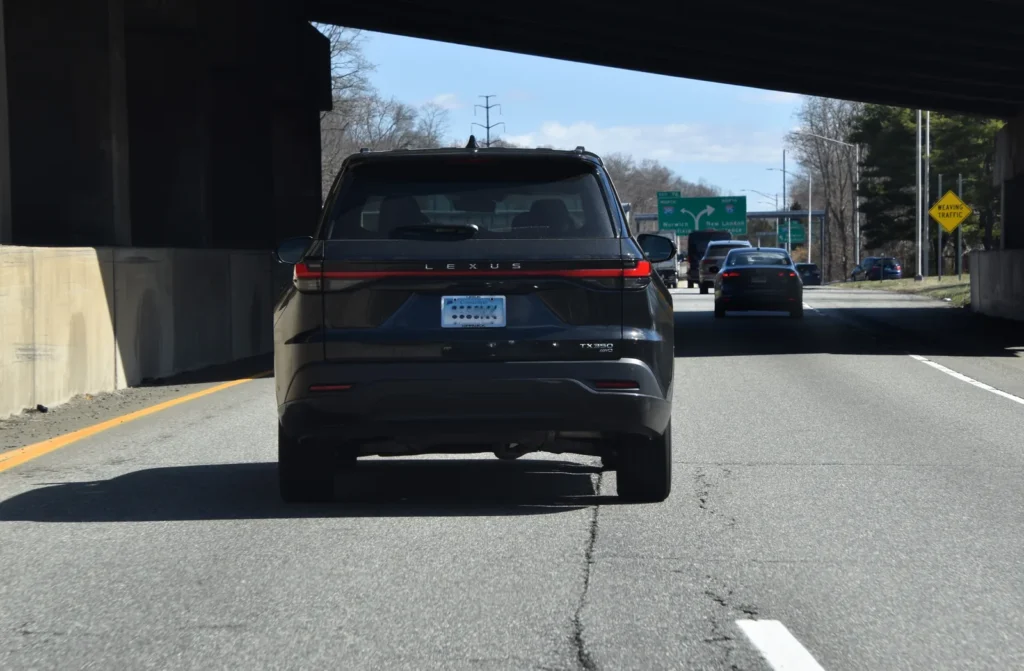
NHTSA’s U.S. filing includes a calculated 1,449 Lexus TX vehicles within a 5,408-vehicle recall population. Before delivery, buyers should verify VIN status and, if the campaign applies, retain the dealer record showing whether inspection cleared the vehicle or led to replacement.
Recall 26V437 is not a model-wide reason to cancel every 2026 Lexus TX order. It is a reason to pause when a VIN’s campaign status or remedy record remains unresolved.
Toyota filed Part 573 Safety Recall Report 26V437 with NHTSA on July 8, 2026, covering 5,408 U.S. vehicles across five vehicle classes and two model lines. Three of those classes are Lexus TX.
What matters at a delivery appointment is narrower. The remedy has two possible completed outcomes — an inspection that finds no affected code, or an inspection followed by replacement — and NHTSA’s lookup does not show which work was performed once a recall is closed. A blank screen is not proof of non-involvement either. Dealer notification was planned for July 8; owner notification is planned for August 23 through September 6.
What Recall 26V437 covers
NHTSA’s report lists five vehicle classes sharing one component problem. The Lexus entries are the smaller part of it.
| NHTSA vehicle class | Production dates | Potentially involved | Retail-line mapping |
|---|---|---|---|
| 2026 Lexus TX Plug-In Hybrid | Apr. 10–21, 2026 | 46 | TX 550h+ |
| 2026 Lexus TX Hybrid | Apr. 10–27, 2026 | 212 | TX 500h |
| 2026 Lexus TX | Apr. 10–27, 2026 | 1,191 | TX 350 |
| Calculated Lexus subtotal | — | 1,449 | FSC calculation |
| 2026 Toyota Grand Highlander Hybrid | Apr. 10–27, 2026 | 2,449 | — |
| 2026 Toyota Grand Highlander | Apr. 10–27, 2026 | 1,510 | — |
| NHTSA filing total | — | 5,408 | All five vehicle classes |
The 1,449 figure is arithmetic on NHTSA’s three Lexus rows; the report prints no Lexus-only subtotal, and the five class figures add up to the published 5,408 exactly.
The mapping holds because Lexus sells exactly three TX powertrains for 2026, and the filing contains a class for each. That tells you which powertrains appear, not that any grade, drivetrain or VIN is involved — the report notes that not every vehicle in those windows was U.S.-sold, and that the issue affects carriers from a specific supplier production period.
Why five percent is not a failure rate
The summary page carries an estimated percentage with defect of 5%. The text under each vehicle class says what is being counted: an estimate of how many involved vehicles contain the part that could be affected. Toyota adds that any consequence depends on the vehicle and its operating conditions. The chain runs from vehicles named in the filing, to vehicles carrying a suspect carrier, to whether an affected carrier actually breaks in service — and the filing numbers only the first two. Multiplying 5,408 by five percent produces a figure that appears nowhere in the document.
What Toyota says went wrong at the supplier
The chronology starts outside Toyota. In late April 2026 a tier 2 supplier machining carriers from the tier 1 supplier saw abnormal operation, ran a hardness test, got results below design specification, and notified both companies. Carriers were then recovered from both suppliers’ stock and analyzed. Some batches, the report says, had not gone through the ageing furnace process at the tier 1 supplier. Toyota’s design study, including computer-aided engineering stress analysis, found tensile and proof strength below specification and indicated that a break would most likely occur where the carrier attaches to the toe control arm. Toyota’s filed judgment is that such a break can cause loss of toe control function and reduced rear vehicle stability, increasing crash risk in some operating conditions. The parts are two forged-aluminum carriers, 42313-0E090 and 42314-0E130, from Bharat Forge Aluminum USA of Sanford, North Carolina — component numbers, not the inspection codes a technician looks for.
On field experience the filing is narrow: as of June 30, 2026, Toyota reported no Field Technical Reports and no warranty claims from U.S. sources relating or potentially relating to the condition. That does not establish zero accidents, zero injuries, zero complaints or zero failures.
The remedy has two possible completed outcomes
Toyota’s release puts the remedy in one sentence containing a fork: for all involved vehicles the dealer inspects the rear axle carrier sub-assemblies for specific codes, and affected sub-assemblies are replaced at no charge.
The design allows the campaign to end after an inspection finds no affected code, or after an affected sub-assembly is replaced. A vehicle cleared by inspection is not an unrepaired vehicle; it is one the campaign says needed no part. The two endings are still different facts about a specific car, and they read differently to a later appraiser.
What a VIN result can and cannot prove
NHTSA states the limits of its own tool plainly. The lookup returns unrepaired recalls only. It does not show a recall already repaired, and it does not show some recently announced recalls for which not all VINs have been identified; VINs are loaded continuously, and NHTSA asks people to check again. Toyota’s release carries the matching caution, describing the list of involved vehicles as “current as of today’s filing date and is subject to change thereafter.” The report’s line for the date when VINs become searchable carries no date.
A blank public result is therefore one evidence point, not a complete delivery record. It does not separate a vehicle that was never involved from one already inspected, one already repaired, or one whose VIN has not yet been loaded.
What to obtain before delivery
Two questions decide this, in order. Is the VIN’s campaign status confirmed, or merely blank? And if the campaign applies, is the remedy documented as finished?
A blank result answers neither. Save it, run the official checks again close to delivery, and ask the dealer for the VIN’s current campaign status in writing. Once that status confirms the vehicle is not involved, the recall is no longer a reason to stop an otherwise acceptable delivery — though nothing about that car should then be described as inspected or repaired. Where the campaign applies and remains open, or the inspection is undocumented, pause and wait for the document rather than the reassurance.
What to collect:
- A dated Lexus VIN result and a dated NHTSA VIN result, run close to delivery rather than at order.
- The dealer’s current VIN-level campaign status. Do not assume the dealer system and the public lookup update in lockstep.
- If the campaign applies: a dated record of the carrier-code inspection and what it found. An inspection that found no affected code is worth taking delivery on.
- If an affected code was found: a dated completed-replacement record plus confirmation the campaign is closed. A repair order alone can describe scheduled work or a parts wait.
- Your own copy of all of it. A verbal assurance cannot be audited later.
If you already own a 2026 TX
Owners are on a different clock. Toyota plans to notify involved owners by early September 2026, with the filed window running August 23 to September 6. Nobody has to wait for the letter, and Toyota directs owners to its own lookup or to NHTSA’s.
The Part 573 form does not select Do Not Drive or Park Outside. That describes what Toyota filed. It is not a safety clearance from FSC, and it does not replace the manufacturer’s instructions. Keep whatever service record the dealer produces.
Canada is a separate regulatory record
Transport Canada’s record for the corresponding Canadian recall, 2026-330, lists four affected products: the 2026 Toyota Grand Highlander and Grand Highlander Hybrid, and the 2026 Lexus TX350 and TX500h. The TX550h+ does not appear, and FSC does not know why.
Toyota Canada puts approximately 61 vehicles in Canada. NHTSA lists 5,408 in the U.S. filing, and Toyota’s U.S. release describes approximately 5,400 in North America without publicly reconciling the three figures. The two regulators also summarise the consequence differently; FSC applies the U.S. wording to U.S. vehicles. Canadian buyers should work from Canadian records and a Canadian Lexus dealer.
FAQ
Are all 2026 Lexus TX vehicles affected by Recall 26V437?
No. The filing names three Lexus TX vehicle classes built in narrow April 2026 windows — 1,449 vehicles by FSC’s addition of NHTSA’s three rows — and limits the issue to carriers from a specific supplier production period. A build date inside the window does not by itself put a VIN in the campaign.
Does the 5% estimate mean 5% of the vehicles will fail?
No. It estimates how many involved vehicles contain the part that could be affected, not how many will break.
Which Lexus TX powertrains appear in the filing?
The filing contains a vehicle class corresponding to each of the three U.S. TX powertrains: TX 350, TX 500h and TX 550h+. The plug-in hybrid class has the smallest count.
Does a blank VIN result prove that the vehicle was never involved?
No. NHTSA’s lookup shows unrepaired recalls only, and omits recalls whose VINs are still being identified. A blank result is consistent with a vehicle never in the campaign, one already inspected, one already repaired, or one not yet loaded. Ask the dealer to document the VIN’s current status.
What should a buyer retain before delivery?
The dated VIN status from both lookups, the dealer’s VIN-level campaign status, the inspection outcome if the campaign applies, and — where replacement was required — a completed-replacement record plus confirmation the campaign is closed.
Sources checked
- NHTSA Part 573 Safety Recall Report 26V437, Toyota Motor Engineering & Manufacturing, submitted July 8, 2026. Population, production dates, 5% estimate, components and supplier, chronology, remedy design, consumer-advisory fields, notification schedule, and the U.S. Field Technical Report and warranty-claim statement as of June 30, 2026.
- Toyota USA Newsroom recall announcement, July 8, 2026. Public summary, inspect-and-replace remedy, early-September owner notification, VIN-check direction, subject-to-change caution.
- NHTSA recall lookup guidance. What the VIN search shows and does not show.
- Lexus USA Newsroom, 2026 Lexus TX, pricing updated June 19, 2026. TX 350 / TX 500h / TX 550h+ line-up, grades, assembly plant.
- Toyota Canada recall announcement, July 8, 2026. Canadian population and Canadian VIN-check direction.
- Transport Canada Recall 2026-330, published July 8, 2026, record updated July 10, 2026. Canadian affected-product list and Canadian issue and safety-risk wording.
All six were opened directly on July 24, 2026.
Limitations
FSC has not confirmed, as of July 24, 2026: complete VIN loading across the public lookups; universal current dealer inspection availability; current replacement-parts availability; the existence of a public campaign-specific dealer instruction; the exact dealer-system fields used to close the campaign out; the complete manufacturer-code set or its model and powertrain mapping from a public Toyota, Lexus or dealer campaign document; or any official accident or injury count.
Toyota’s Field Technical Report and warranty-claim statement is limited to U.S. sources and to June 30, 2026. This article does not establish that there have been zero incidents.
The Canadian and U.S. records are separate regulatory filings with different affected-product lists. FSC does not explain the difference and does not apply either record to the other country’s vehicles.
FSC has not driven, inspected, measured, serviced or repaired a Lexus TX, and has no manufacturer or dealer access for this article.
Last updated
July 24, 2026.