18 July 2026
BMW Recall 26V441: What the August 28 VIN Date Means Before You Buy
Car Buying
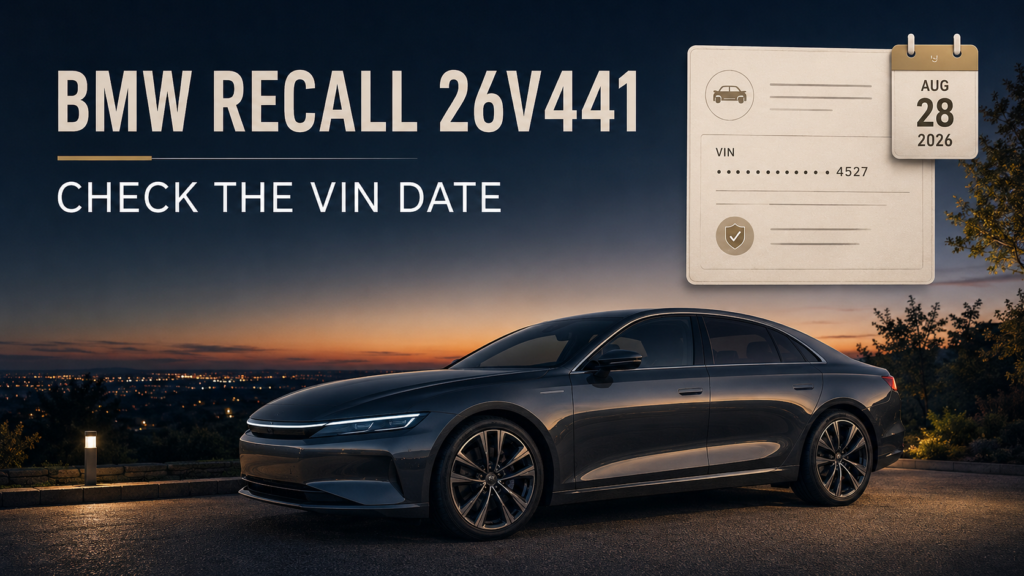
BMW is recalling certain 330e, 530e and 740Le plug-in hybrids over a starter relay that can corrode and overheat. The park-outside advisory and a delayed VIN-search date change what a buyer needs to confirm.
BMW is recalling 29,119 plug-in hybrids in the United States — certain 330e, 530e and 740Le models from the 2016 through 2020 model years — because an engine starter relay can corrode after water reaches it and, in some cases, short-circuit and overheat. NHTSA lists the campaign as recall 26V441. The fix is a free starter replacement at an authorized BMW dealer, and until that repair is done BMW advises owners to park outside and away from structures, because the filing describes a thermal risk that can occur even when the car is parked with the ignition off.
For anyone shopping one of these hybrids right now, the timing is the catch. BMW notified NHTSA on July 8, 2026, but the affected VINs are not scheduled to appear in NHTSA’s VIN lookup until August 28 — and before that date, an empty recall result on a specific car proves nothing. If a car you are considering falls in this group, treat recall status as something to document with BMW or a dealer before you put money down. A current owner of a confirmed-affected car should follow the park-outside advice and book the free repair; a buyer whose seller cannot document VIN status before August 28 has good reason to wait.
What Recall 26V441 Covers
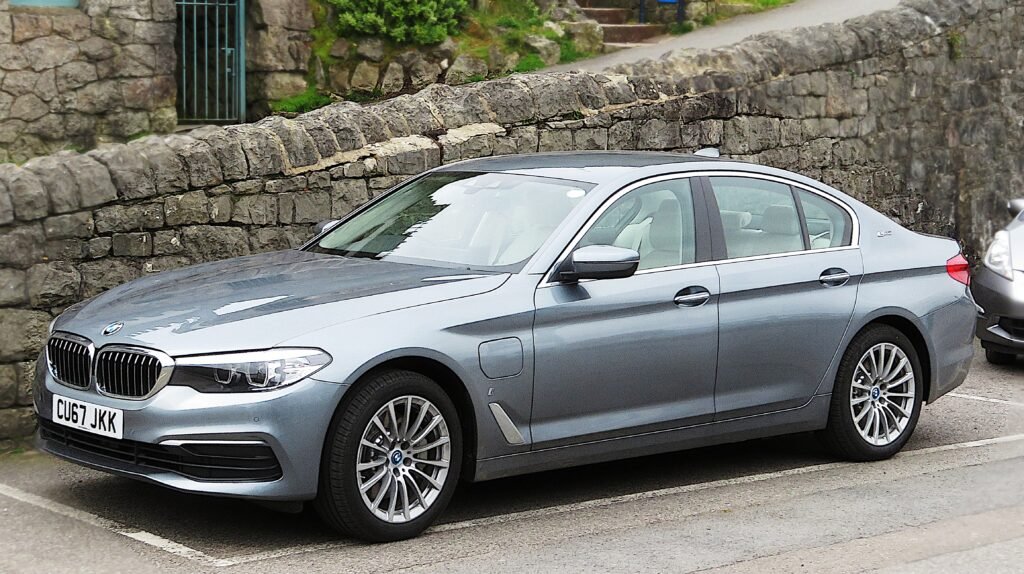
The recall reaches four plug-in hybrid configurations, all built with an engine starter of a particular production specification. That last point matters: the population figures below count vehicles assembled with the relevant starter, not every 330e, 530e or 740Le on the road in these years.
| Model | Model years | Production dates | Potentially involved (U.S.) |
|---|---|---|---|
| 330e iPerformance | 2016–2018 | Jul 13, 2015 – Oct 5, 2018 | 7,852 |
| 530e iPerformance | 2018–2020 | Feb 22, 2017 – Jun 18, 2020 | 14,406 |
| 530e xDrive | 2018–2020 | Feb 23, 2017 – Jun 9, 2020 | 5,803 |
| 740Le xDrive | 2017–2019 | Mar 14, 2016 – Feb 14, 2019 | 1,058 |
The common thread is the starter, supplied by Valeo — the same component family behind a wider BMW starter campaign that began in 2025. Inside it is an electrical relay. BMW’s account is that water can reach that relay and, over time, cause corrosion that interferes with the electrical connection; in some cases the corrosion can also produce a short circuit and overheating, and in an extreme case a thermal event — what NHTSA’s public summary characterizes as an increased risk of fire.
One clarification matters early, because these are plug-in hybrids and the word “fire” invites the wrong assumption: this is a recall of the engine starter relay on the gasoline side of the powertrain, which NHTSA classifies as the starter assembly relay. It is not a traction-battery recall, and it is separate from any battery warranty or capacity coverage on these cars.
Why BMW Says to Park Outside
Most recalls that carry a fire risk still let you use the car normally until the remedy is available. What sets this one apart is where the risk can occur. Because corrosion inside the relay can develop and short-circuit on its own, BMW’s filing states that a thermal event could happen during driving or while the vehicle is parked with the ignition off. That second scenario is the reason for the interim instruction to park outside, away from buildings and other structures, until the starter is replaced. NHTSA’s acknowledgement letter carries the same framing in its subject line, opening with “Park Outside.”
It is worth being precise about what that advisory is and is not. BMW has not issued a do-not-drive order, and owners are directed to a dealer for the free repair. The public filings set a parking instruction and a remedy; they do not add a separate do-not-drive or transport instruction. Equally, the absence of a do-not-drive order is not a blanket assurance that nothing can happen — it is guidance to reduce exposure, not a statement that the risk is zero.
On the question of real-world harm, BMW’s chronology describes several field incidents that were examined during the investigation, along with a teardown analysis of about 150 starters returned from the field between January and April 2026. BMW separately states that it is not aware of any accidents or injuries related to the issue.
What the August 28 VIN Date Actually Means
Here is the part a buyer has to hold in mind. BMW reported the recall to NHTSA on July 8 and NHTSA acknowledged it on July 13, but the schedule sets a single later date — August 28, 2026 — for two things at once: owner notification letters go out, and the affected VINs become searchable on NHTSA.gov. Between the July filing and that August date, the campaign is on the record, but a public VIN search is not yet the way to confirm an individual car’s status.
That gap changes how a search result should be read.
Before August 28, a clean NHTSA result cannot be treated as clearance from 26V441. NHTSA’s own guidance is explicit that its lookup may not show recently announced recalls before all affected VINs have been identified and added, and that VINs are added on a rolling basis. In this window, an empty screen settles nothing about whether a specific car is in the campaign.
On or after August 28, an open 26V441 record means NHTSA is displaying an unrepaired recall for that VIN. A zero result is the trickier case. NHTSA shows unrepaired recalls, not ones already fixed — so a screen with no unrepaired recall cannot, by itself, tell you whether the car was never part of 26V441 or was part of it and has since been repaired. Those are different facts with the same look on screen, and a lookup can also lag a car’s actual repair state.
BMW runs its own VIN-based recall lookup as well, which is a useful cross-check. One caveat applies specifically to BMW’s tool: the company asks owners to allow up to 30 days after a completed repair for its recall data to update. That window describes BMW’s own database, not NHTSA or third-party history reports — and it is why a paper trail beats a status screen. If a starter replacement has been done, the document that settles it is a BMW repair order identifying recall 26V441, or one that otherwise clearly records completion of the recall starter replacement for that VIN; a generic starter invoice is not the same thing, because it need not tie the work to this campaign.
How 25V636 Relates — and Why 26V056 Is Different
Recall 26V441 follows BMW’s continued investigation after recall 25V636, filed in September 2025, which covered a much larger group — 196,355 conventional gasoline BMWs across several lines, plus the Toyota Supra built alongside the Z4. That campaign traced the same water-ingress starter-relay corrosion pathway, again involving a Valeo-supplied starter, and it carried the same park-outside advisory. What 26V441 does is extend that work to a remaining set of four-cylinder plug-in hybrids that had not yet been covered.
A third campaign is easy to lump in with these two, and it should not be. Recall 26V056, filed in January 2026, involves the engine starter as well, but the mechanism is different: unexpected wear on an internal component that leaves a build-up of metallic material in the relay chamber. Its filing frames the thermal risk as arising when starting the engine or while the engine is running, and — unlike 26V441 and 25V636 — it does not carry a park-outside advisory. Its affected VINs also became searchable earlier, on March 24, 2026. The distinction is practical: the park-outside instruction attaches specifically to the water-corrosion mode, so treating all three campaigns as one recurring fault would misread both the risk and the guidance.
What to Verify Before Paying a Deposit
The verification here is not about doubting a seller. It is about the documentation boundary — what a listing can and cannot prove on its own.
Start with the VIN. Ask BMW or an authorized dealer to resolve the vehicle’s status for 26V441 and to provide any available recall or repair record. If the seller cannot document that answer before you commit — especially during the pre–August 28 window when the public lookup is silent — waiting is the safer call. If a starter replacement has already been performed, ask for the BMW repair invoice and keep it; for the reason above, it is worth more than an immediate change in public status.
Two points on what a sales channel does and does not settle. A used listing is not proof that the recall has been addressed. NHTSA’s April 2026 report notes that the federal prohibition on selling or leasing a new vehicle with an open safety recall does not generally extend to used-vehicle sales, with rental-car companies the stated exception. That describes federal sales rules, not the legality of any specific transaction — and the buyer takeaway is narrower: a listing, Certified or otherwise, does not verify completion. Only VIN-level recall status and a matching repair record do that.
There is also a livability factor unique to this recall. If a car you want turns out to be affected and you have nowhere to park it outside and away from structures, that constraint is real until the remedy is done, and it is a legitimate reason to wait or cross-shop. None of this adds up to a verdict on whether these hybrids are good cars to own — that is a broader question than one starter campaign can answer.
FAQ
Is recall 26V441 a high-voltage battery recall?
No. Despite these being plug-in hybrids, the recall covers the engine starter relay on the gasoline side of the powertrain, which NHTSA classifies as the starter assembly relay. It is unrelated to the high-voltage traction battery or to any battery-capacity or state-of-health coverage on the vehicle.
Is recall 26V441 a do-not-drive recall?
No. BMW advises owners to park outside and away from structures until the free starter replacement is completed, but the filing does not tell owners to stop driving, and the remedy involves taking the car to a dealer. The absence of a do-not-drive order is not a guarantee that nothing can happen, so the reasonable course is to follow BMW’s guidance and complete the repair promptly rather than to assume the risk is zero.
What does a zero NHTSA VIN result mean before and after August 28?
Before August 28, 2026, a zero result cannot be treated as clearance — that is the date NHTSA sets for the 26V441 VINs to become searchable, so an earlier search may simply not reflect the campaign yet. On or after that date, a zero result means no unrepaired recall is displayed — but because NHTSA does not show recalls that have already been repaired, it cannot by itself distinguish a car that was never included from one that was included and already fixed. A BMW repair order that identifies recall 26V441, rather than a generic starter invoice, resolves the ambiguity.
Sources Checked
- NHTSA, Part 573 Safety Recall Report 26V441 (BMW of North America), submitted July 8, 2026 — https://static.nhtsa.gov/odi/rcl/2026/RCLRPT-26V441-0046.pdf
- NHTSA, Recall Acknowledgement Letter 26V441, dated July 13, 2026 — https://static.nhtsa.gov/odi/rcl/2026/RCAK-26V441-5817.pdf
- NHTSA, Part 573 Safety Recall Report 25V636 (BMW of North America), submitted September 23, 2025 — https://static.nhtsa.gov/odi/rcl/2025/RCLRPT-25V636-0319.pdf
- NHTSA, Part 573 Safety Recall Report 26V056 (BMW of North America), submitted January 30, 2026 — https://static.nhtsa.gov/odi/rcl/2026/RCLRPT-26V056-6534.pdf
- NHTSA, “Check for Recalls” VIN-lookup guidance — https://www.nhtsa.gov/recalls
- BMW USA, Safety and Emission Recalls (VIN lookup and recall-data notice) — https://my.bmwusa.com/safety-and-emission-recalls
- NHTSA, “Improving Vehicle Safety Recall Completion Rates,” Report to Congress, April 2026 (used-vehicle sale prohibition) — https://www.nhtsa.gov/sites/nhtsa.gov/files/2026-04/Report-to-Congress-Improving-Vehicle-Safety-Recall-Completion-Rates-Report-April-2026-tag.pdf
Limitations
FSC has not inspected, driven, diagnosed, repaired, or tested an affected vehicle. This analysis is based on NHTSA filings and official public records for the United States only, and it does not attempt to judge the overall reliability, ownership cost, or value of the 330e, 530e, or 740Le.
Several details were not established in the reviewed public material and should not be assumed: the date recall 26V441 will appear in BMW’s own VIN tool; when every authorized dealer can identify every affected VIN; parts availability and typical repair duration; whether loaner vehicles are offered; whether BMW has a specific stop-sale policy for this campaign; and any effect on resale value or insurance. None of these should be inferred from the existence of the recall.
Last Updated:July 17, 2026.
Mandatory update trigger: August 28, 2026 — the scheduled date for owner notification letters and for the affected VINs to become searchable on NHTSA.gov. On or after that date, this article should be rechecked for VIN searchability, owner-letter availability, whether BMW’s public VIN tool shows the campaign, any posted dealer or remedy documents, and any change to parts, repair time, or owner guidance.